THE SMALLEST LITTLE HISTORY MUSEUM IN TEXAS? WELL, MAYBE.
A HONKY-TONK BY ANY OTHER NAME
Before the country stars and neon signs, there were ordinary people looking for a place to gather, dance, listen, laugh, and forget their troubles. The honky-tonk grew out of that world. We're not putting the past behind glass. We're trying to keep a little of it breathing.
01 / THE WORDS ON THE SIGN
How Do You Spell Honky-Tonk?
Honky-tonk (with a hyphen) is the usual dictionary spelling. Honky tonk (two words) is common, too, and honkytonk (one word) turns up in business names, signs, and informal writing.
People also search for honkey tonk, with a hard E, or honkie tonk. Those aren't the standard dictionary forms, but we know what they mean. Even nineteenth-century newspapers couldn't settle on one spelling.
- honky-tonk
- honky tonk
- honkytonk
- honkey tonk
- honkie tonk
- honk-a-tonk
- honkatonk
- Honk-E-Tonk
Some of those last three forms appeared in early accounts of the word. So if you typed it wrong, you're in mighty fine historical company.
02 / BACK WHEN IT WAS A LITTLE ROUGHER
From Saloons to Dance Halls
The word honky-tonk appears in Texas newspaper references from the late 1880s and early 1890s, associated with noisy entertainment places and variety theaters. Nobody knows for certain how the name was invented.
These weren't grand concert halls. A honky-tonk might be a rowdy theater, a saloon, a roadside joint, or a dance floor where somebody pushed the tables back to make room. The word gradually came to mean not only a kind of establishment, but also the music people played there.
That music was made for people who had been working all day and didn't have the money—or the inclination—to go somewhere fancy.
03 / SAME HARD TIMES, DIFFERENT HISTORIES
The Poor Working Man's Music—and Its Kinship with the Blues
Let's say the part that sometimes gets left out of the polished country-music story: honky-tonk country became, in many parts of the segregated South, music for poor and working-class white folks. The people in those rooms knew long shifts, short paychecks, broken hearts, and a need to blow off steam.
Meanwhile, the blues grew from Black American life and musical traditions, particularly in the South. It gave voice to love, grief, hard labor, injustice, travel, and survival. The two histories are not the same, and segregation shaped who could play in which rooms. But both traditions made something powerful out of everyday struggle.
In one sense, honky-tonk was poor white folks singing their blues. The blues itself was born from Black American experience. Different histories, plenty of shared heartache—and generations of musical influence flowing back and forth.
Country and blues musicians listened to and influenced one another across racial and musical boundaries. The fiddle, guitar, train rhythm, lonesome voice, and heartbreak song never belonged to just one tidy little box. That's part of the story worth remembering.
1880s–1890sEarly Texas references to the word describe rough entertainment places, theaters, and nightlife. The name's exact origin remains a mystery.
1930s–1940sWorking-class dance halls and small bars become homes for hard-living songs and emerging country sounds. Texas and Oklahoma are central to the story.
1940s–1950sAmplified guitars, steel guitar, and a strong beat help musicians rise above the barroom noise. Ernest Tubb, Hank Williams, Kitty Wells, and others help define the sound.
04 / THE ONE THAT GOT AWAY
THE NIGHT BILLIE PIERCE KICKED ROY ORBISON OUT
Now here's one from our own family's honky-tonk history. As Michael Dean Pierce Jr. tells it, his grandmother, Billie Pierce, once sent a young Roy Orbison packing from her honky-tonk.
Her reasoning? He just wasn't honky-tonk enough for that crowd. The way the story has been handed down, she figured the regulars would “eat him alive.” So out he went.
Of course, Roy Orbison went on to become Roy Orbison—one of the most unmistakable voices in American popular music. Which brings us to the moral of this family exhibit:
YOU CAN'T GET IT RIGHT EVERY TIME. ESPECIALLY IN A HONKY-TONK.
Maybe there's a lesson in there for anyone brave enough to walk onto a stage with an original song. Musical history has a funny way of surprising the person working the door.
This is a Pierce family story, shared by Michael Dean Pierce Jr. as oral history. We don't have an independent contemporary record of the encounter, so we tell it as the family remembers it, with a wink and affection for Billie—and plenty of respect for Roy.
05 / NO FANCY DRESS REQUIRED
What Makes a Real Honky-Tonk?
It isn't the square footage. It's not a brand of beer, a giant stage, or a cowboy hat bought yesterday.
It's the sound of somebody singing a truth they actually lived. It's a room where strangers become friends, somebody tells a story too long, and the music is close enough to make you feel part of it.
Some old honky-tonks were rough. Some were joyful. Most were a little of both. The best ones gave everyday people a place that felt like their own.
06 / NOT BEHIND GLASS
Our Little Living Relic in Tomball
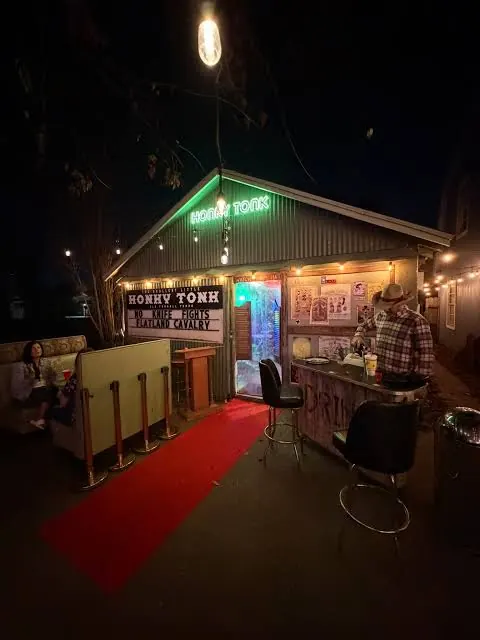
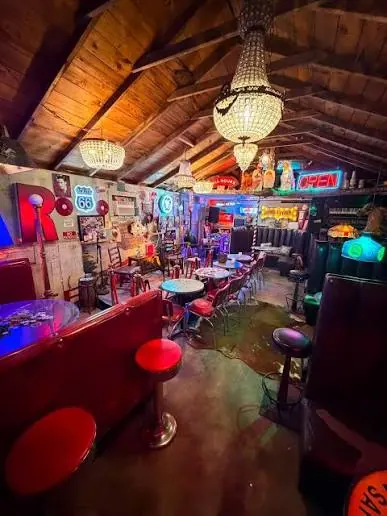
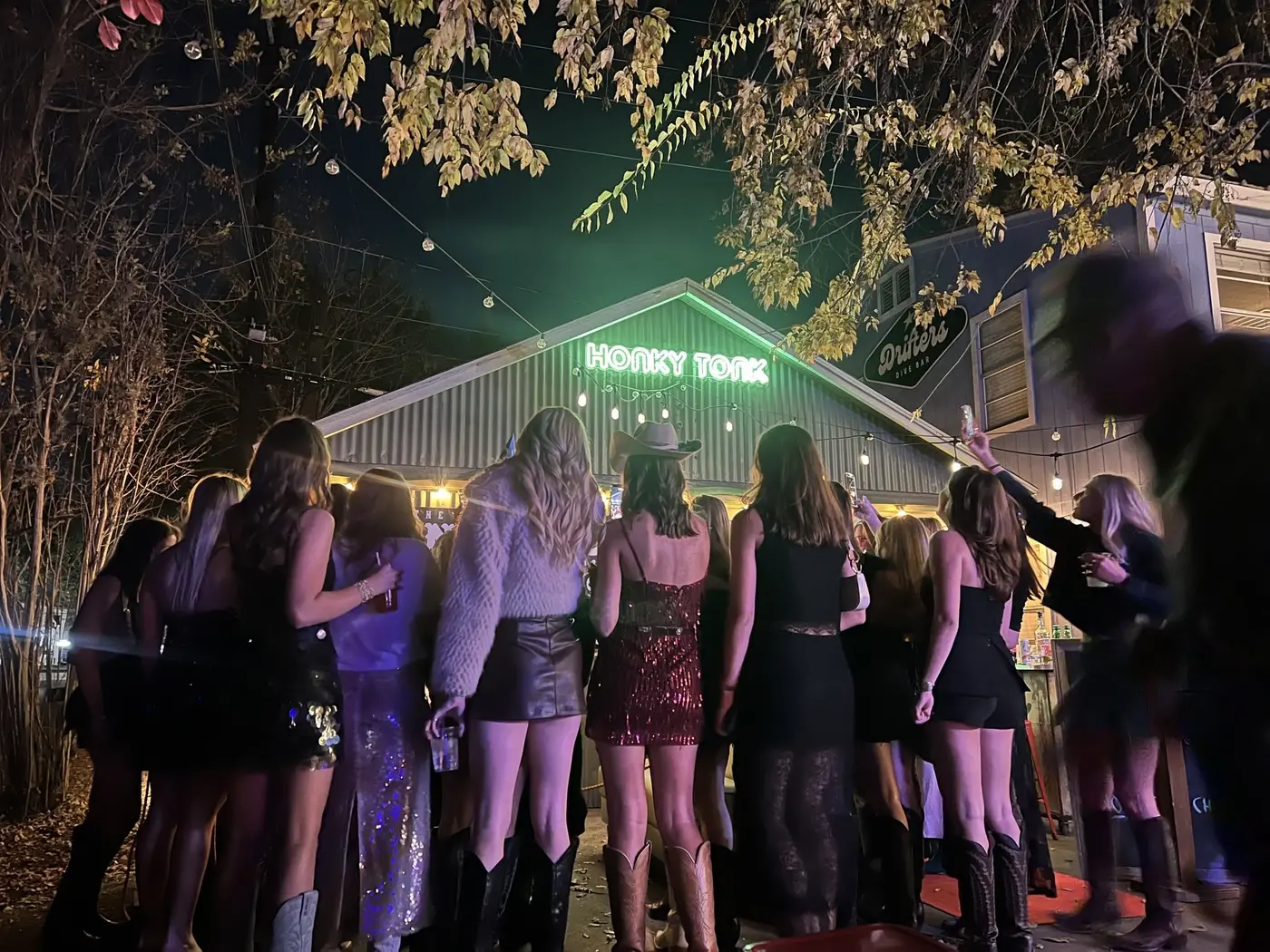
At The Little Honky Tonk in Historic Tomball, Texas, we're carrying a small piece of that tradition forward. We treasure old Western art, hand-drawn posters, curious objects, original songs, and musicians with something to say.
This isn't a museum where you stand behind a rope and admire the past. The songs are still being written. The chairs are still filling. The stories are still getting better—or less believable—with every telling.
We call ourselves The Smallest Little Honky Tonk in Texas. We mean it with affection, a little mischief, and a whole lot of respect for the people who came before us.